

A consistent look across every desk and branch
Your reception, customer service and sales teams represent your brand every working day. A well-made corporate uniform makes them instantly recognisable, removes daily dress-code questions and gives staff a professional look they are comfortable in.
We design corporate ranges as a system rather than a single outfit. Core pieces such as shirts, blouses and trousers are worn daily, while blazers, ties, scarves and waistcoats distinguish roles or seniority. Everything shares the same colour palette and branding, so the team looks coordinated whether there are five people or five hundred.
Roles and what they usually wear
Most corporate ranges are built from a small set of core garments, combined differently for each role. A typical starting point looks like this, and we adjust it to how your teams actually work.
- Reception and front desk: blazer or waistcoat, long-sleeve shirt or blouse, tailored trousers or skirt, and a tie or scarf in your brand colour
- Customer service and branch counters: shirt or blouse with an embroidered logo, trousers or skirt, and a blazer for cooler, air-conditioned spaces
- Sales and relationship managers: suit or blazer with matching trousers or skirt, with lighter branding
- Senior management: made-to-measure suits and blazers, often with a brand-coloured lining instead of a visible logo
- Field, technical and delivery staff: embroidered polo shirts, practical trousers, caps and a jacket for the winter months
- Drivers and office support: polo or shirt, trousers and cap in the same colour family
- Events and exhibitions: polos or T-shirts that match the rest of the range
Modest and layered options
Many UAE workplaces want options that suit staff who prefer more coverage. Longer jackets, tunic-length blouses, full-length skirts, long sleeves and coordinating scarves in your brand colours can all be part of the range. We agree these at design stage, so every option is clearly the same uniform rather than an exception.
Fabrics and fit for UAE offices
UAE office staff move between air-conditioned interiors and outdoor heat several times a day. We recommend breathable, easy-care fabrics for shirts and blouses, and suiting with enough stretch and structure to stay sharp through a long day. Easy-iron and wrinkle-resistant finishes are available for teams who travel or do their own laundry.
Fit matters as much as fabric. We offer ready sizes from XS to 4XL with men's and women's cuts, and made-to-measure for suits and blazers. Our team can measure staff at your premises so every piece fits from the first day.
Fabric choices and why
We show real swatches so you can compare weight, handle and colour before deciding. Our fabric guide explains these options in more detail.
- Poly-cotton shirting (poplin or oxford weave): breathable, keeps a crisp collar and is easier to iron than pure cotton, so it suits daily office shirts and blouses
- Stretch shirting with a small percentage of elastane: more comfortable for staff who drive, reach or sit for long periods
- Polyester-viscose gabardine or suiting: holds a crease, resists wrinkling and is lighter than wool, which suits trousers, skirts and blazers worn in the UAE
- Wool-blend suiting: a softer drape for senior and formal roles; it usually needs dry cleaning
- Cotton or poly-cotton pique: the standard knit for polo shirts, breathable and easy to embroider
- Easy-iron and wrinkle-resistant finishes: useful for staff who travel or wash their uniforms at home
Branding that looks professional
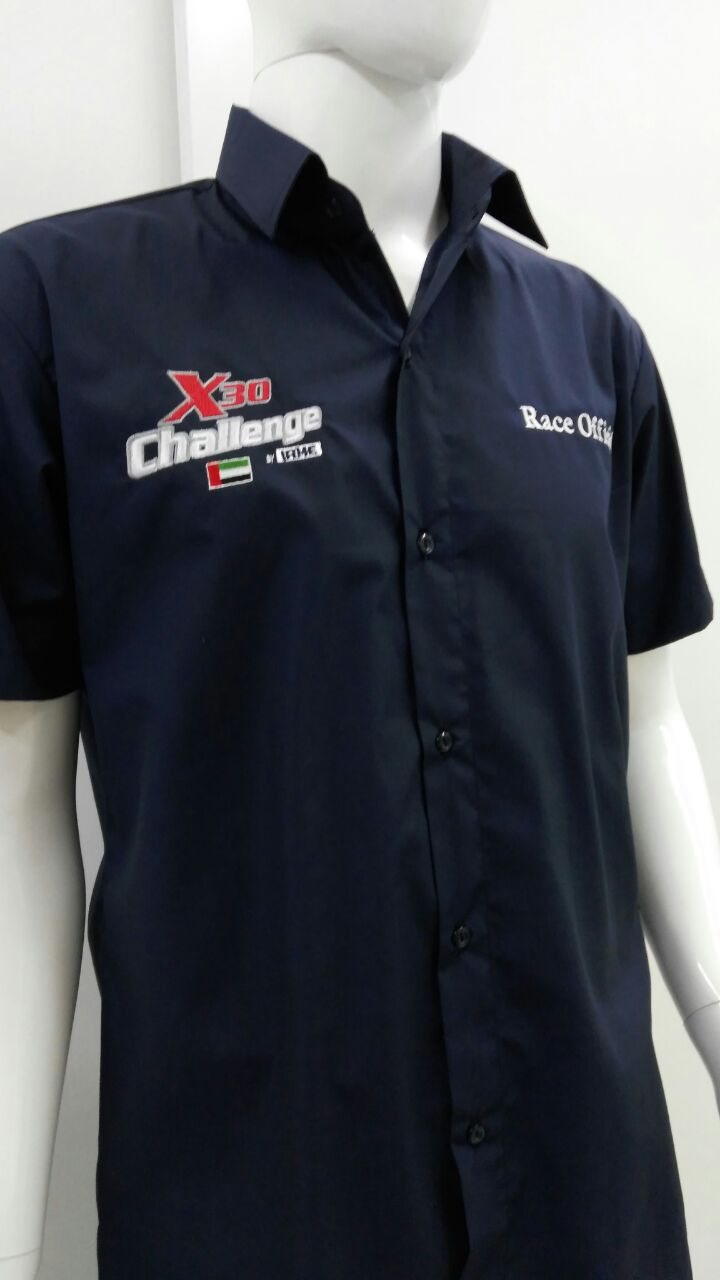
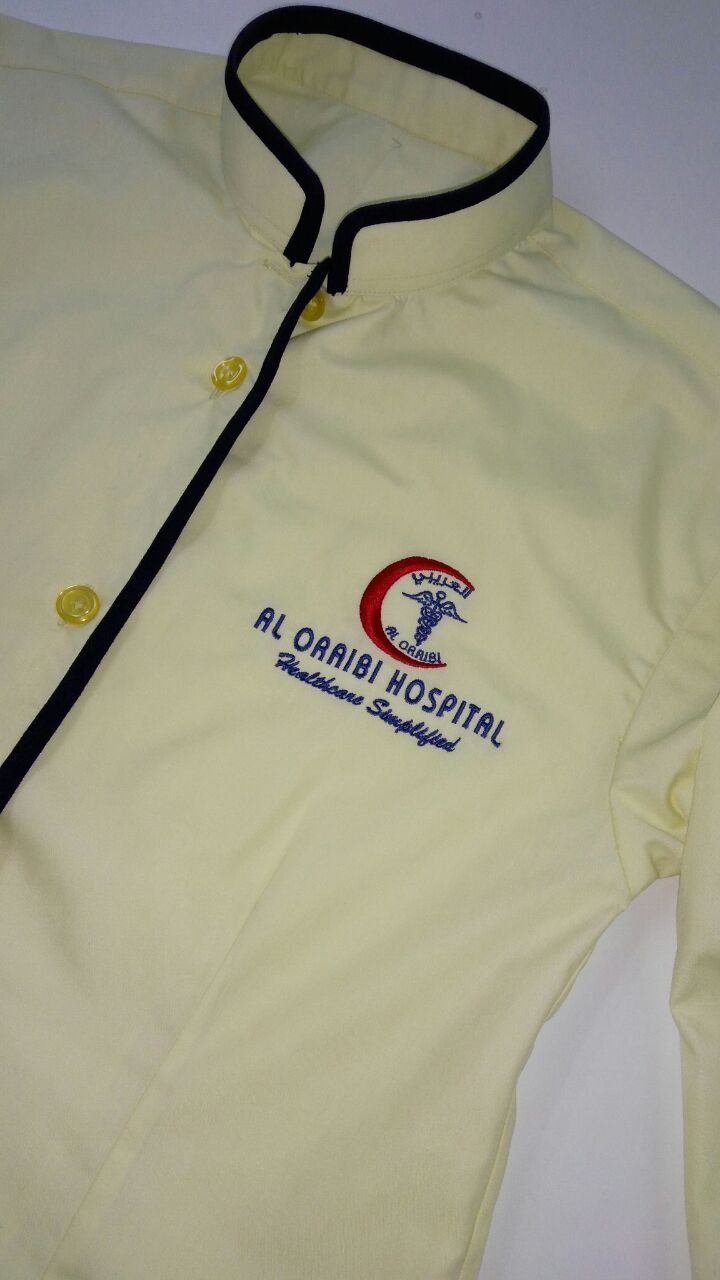
Corporate branding works best when it is understated. We typically embroider logos on the chest or cuff of shirts and on blazer pockets, matching thread to your brand colours. Scarves, ties and linings can be produced in your corporate colours for a finished look.
Printing is rarely used on formal office wear, but it works well for event T-shirts and campaign polos that sit alongside the core uniform.
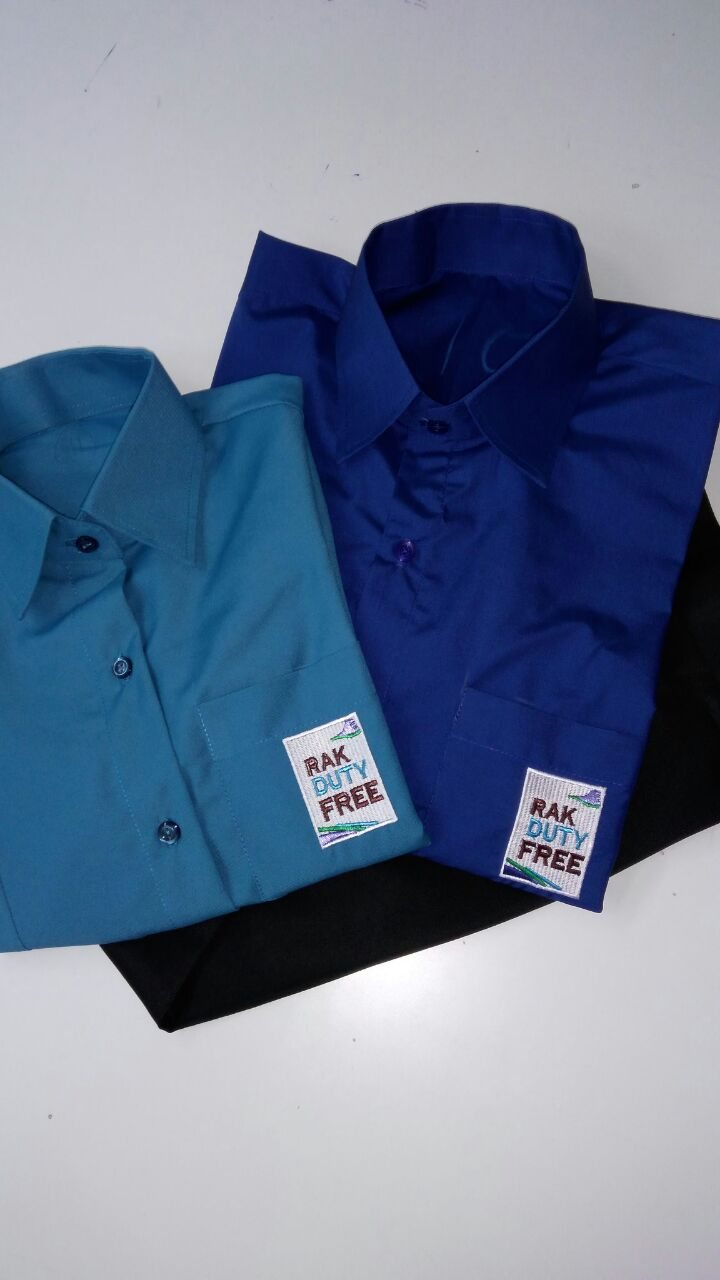
- Shirts and blouses: small logo on the left chest or on the cuff
- Blazers: embroidered on the breast pocket, or branding kept to the lining
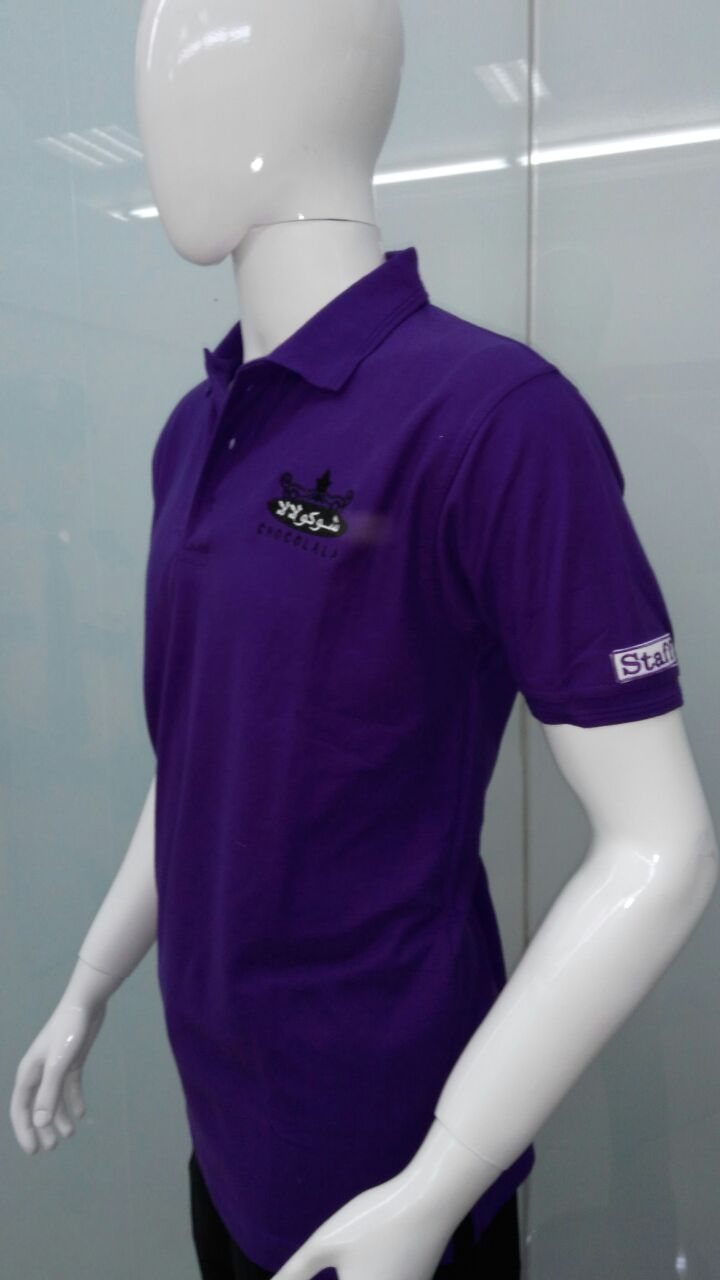
- Polo shirts: left chest logo, with optional sleeve or back branding
- Ties and scarves: woven or printed in your colours rather than carrying a logo
- Names and titles: embroidered under the logo or supplied as separate badges
How a corporate uniform project runs
- Brief: roles, headcount per role, brand guidelines, budget per person and the date the uniform should be in use
- Proposal: styles for each role with fabric swatches and branding options
- Quotation: a written quotation per garment, which confirms minimums and the delivery date
- Sample: one sample per style for approval by HR, brand or management; it counts as part of your order
- Sizes: a measurement session at your office, size sets for staff to try, or your own size list
- Production and branding: garments made, embroidered and quality checked
- Packing and delivery: packed and labelled by employee, department or branch and delivered to each site
- After delivery: alterations, replacements and new-joiner sets from the approved design
Sizing and fitting a whole office
Ready sizes run from XS to 4XL in men's and women's cuts. For shirts, blouses and trousers, most companies collect sizes by letting staff try size sets at the office for a few days, or by asking us to run a short fitting session department by department. Suits and blazers can be made to measure for people who fall between sizes or for senior roles.
Each person's sizes are recorded against their name. Hems and sleeves can be adjusted in our workshop after delivery, and our size guide explains how staff can measure themselves if they work remotely.
Allowances, new joiners and reorders
Decide early how many pieces each person receives. Many companies issue enough shirts or blouses for staff to rotate through the working week, with one or two blazers or jackets that are cleaned less often. Staff who wash at home generally need more shirts than teams with a laundry service.
Approved designs, fabric references and logo files stay on record, so new joiners receive the same uniform as everyone else. If a mill discontinues a fabric, we tell you and propose the closest alternative before any production.
Care advice for staff
- Wash shirts and blouses at the temperature on the care label, usually 30–40°C, and hang them to dry to reduce ironing
- Iron embroidered logos from the reverse side to keep the stitching raised
- Air blazers and suit jackets between wears and dry clean them as the label advises
- Wash dark trousers inside out to slow fading
- Avoid bleach on coloured garments and on embroidery thread
Corporate uniform planning checklist
- List every role and the number of people in each
- Share brand guidelines, colour references and logo files
- Decide whether managers and front-line staff should look different
- Agree the modest options you want to offer
- Set the allowance per person and a small reserve for new joiners
- Choose who signs off samples
- Confirm delivery sites and how orders should be packed
- Fix the date the uniform will be launched to staff